
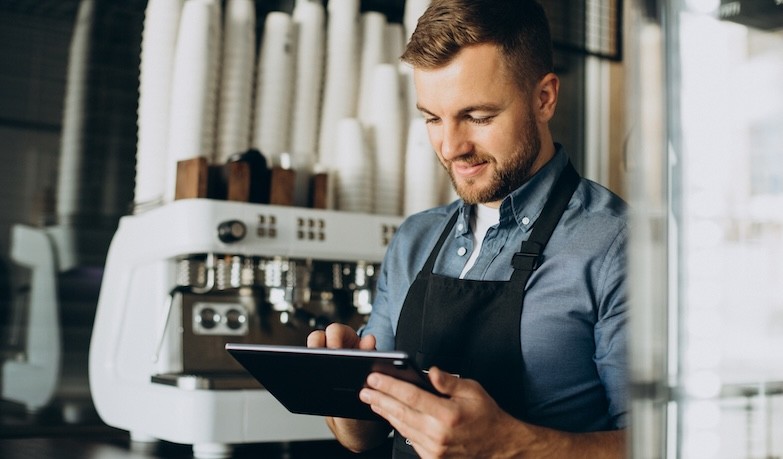
Anyone who's worked a busy open knows the feeling. The machine's hissing, two drinks are up, the card reader just froze, and a regular wants to tell you about their weekend; everything, everywhere, all at once.
That's fine once in a while. The problem is when it's every morning. A cafe that runs on adrenaline daily doesn't have a busy problem; it has a management problem.
Managing a cafe comes down to keeping a handful of moving parts steady at the same time: your people, the drinks, your stock, your costs, and how the place feels to walk into. You won't do all of it yourself. Your job is making sure it all gets done.
TL;DR
Cafe management involves overseeing daily operations, staff performance, inventory, guest experience, and financial health in a fast-paced, high-volume environment. It requires both hands-on presence and systematic thinking. Good managers run on routines and decent systems. The rest just react to fires as they catch.
The 5 Things That Decide Whether a Cafe Runs Well
Managing a cafe well comes down to a handful of interconnected responsibilities. Neglect one, and it usually shows up somewhere else.
1. Staff Hiring, Training, and Retention
Cafe and restaurant operations differ more than they look. In a restaurant, a weak server can get covered by a bigger team. In a cafe, one undertrained person slows service, changes drink quality, and affects the mood at the counter all at once.
That’s why finding and hiring good talent matters. You can teach latte art faster than you can teach calm under pressure. During training, cover both drink skill and guest interaction. A barista needs to make the drink right. They also need to greet a regular in a way that feels natural and human.
Keeping good people matters for revenue too. Regulars often bond with staff. If a favorite barista leaves, some guests drift away with them. Flexible schedules, fair treatment, and a steady work environment often matter more to cafe staff than a small pay bump elsewhere.
2. Menu Discipline
Cafe menus look short but are often more complicated than they seem.
A menu with a few coffee drinks can still create chaos once you add sizes, alt milks, syrup choices, iced or hot, extra shots, no foam, light ice, and food pairings. A two-person bar cannot carry a menu that tries to do everything.
Keep it tight. Building a profitable coffee shop menu means costing each item, testing specials before they go permanent, and cutting slow sellers that create prep work without the sales to justify it. A restaurant can spread a wide menu across a big kitchen. Most cafes don't have that luxury.
3. Inventory and Waste Control
Cafe waste is easy to miss. It shows up as five pastries left at close. A little too much milk opened each morning. Batch brew tossed after the rush. Free-poured syrup in every drink.
That's why par levels matter. Solid coffee shop inventory management starts with three habits:
Set a target for what you need on hand each day.
Set prep targets.
Compare the target with actual sales and waste.
If you skip that step, ordering stays a guess.
Recipe standards matter here as well. If one barista pumps three shots of syrup and another pours freely, your drink cost changes all day long. Ingredient-level tracking helps you spot that drift early.
4. Consistency of Product and Experience
A cafe regular notices small changes fast. A flat white may taste off. Or music is suddenly too loud. That kind of inconsistency chips away at repeat business. Guests may not complain. They just come less often.
Consistency in a cafe means:
recipe standards
fixed open times and routines
clear handoff between shifts
a room that feels familiar in a good way
Since cafes often run with lean teams, those standards need to be put in checklists and training.
5. Owner or Manager Involvement vs. Systems
Many owners get stuck behind the counter for years. They feel needed every hour of every day. That is usually a systems issue, not a work ethic issue.
To fix that, focus on a few simple systems:
Write clear SOPs for opening, closing, cash handling, drink builds, prep, and equipment issues.
Train a second-in-command so the cafe can run smoothly when you are not there.
Review sales, labor, and waste each week to catch patterns early, rather than reacting after a bad month.
The goal is not to remove people from the business. The goal is to stop the business from falling apart the second one person steps away.
The Numbers Every Cafe Manager Should Watch
Sales tell you what came in. They do not tell you why money feels tight. For that, you need a short set of numbers to review each week and a few to glance at every day.
If you want a deeper look at cafe margins, this coffee shop margin guide is a useful next read.
Labor Cost Percentage
A common target for cafes sits around 25% to 35% of sales. A high-volume counter-service shop may land near the lower end. A cafe with table service may charge more.
The hard part is the morning spike. You need enough people for the rush, yet those same hours may turn quiet soon after. The answer is better shift timing, not cutting rush coverage so far that service breaks down.
Cost of Goods Sold (COGS)
Most cafes land between 25% and 35% of sales. Coffee-heavy shops often land on the lower end. Food-led cafes usually run higher.
A few small issues can push COGS up:
a badly set grinder can raise bean use
free-poured syrups can throw off drink cost
too much pastry prep can leave stale stock at close
Ingredient tracking gives you a clearer view of beans, milk, syrups, and other fast-moving items.
Prime Cost
Prime cost = labor + COGS
For many cafes, a healthy range is around 55% to 65% of sales.
Why it matters:
it combines your two highest controllable costs
it gives you a quick read on shop health
it helps you spot problems earlier
If prime cost starts creeping up, check labor and product cost together.
Average Transaction Value
Average transaction value matters a lot in cafes. even a small increase can add up over time.
Simple example: If a cafe processes 200 transactions a day and increases average spend by $1, that adds about $73,000 in annual sales.
Ways to raise average spend:
suggest a pastry that fits the drink
place high-margin items where guests can see them
use rewards that encourage one extra item
Waste as a Share of COGS
Track waste on its own. Do not hide it inside total food and drink cost.
A simple target:
3% to 5% of COGS often points to a real problem
under 2% is a strong goal for many cafes
Why this matters in a cafe? Waste often happens before a sale, so it is easy to miss.
Common examples include:
extra milk opened too early
unsold pastries at close
brewed coffee dumped after the rush
Revenue Per Labor Hour
Take total sales for a period and divide them by total labor hours in that same period.
That gives you revenue per labor hour.
Use it to compare:
busy shifts vs. slow shifts
weekdays vs. weekends
one daypart vs. another
If Tuesday afternoons bring in far less per labor hour than Friday mornings, your staffing plan should reflect that.
Compliance and Food Safety
No one opens a cafe for logs and inspection prep. Still, these matter every day. One food safety issue or failed inspection can hurt your reputation.
Cafes often run with lean teams. That means training gaps show up quickly. There may be no back-of-house lead catching a fridge temp issue or an allergen mistake.
Food Safety Basics for Cafes
Focus on the non-negotiables:
staff training and food handler cards where required
handwashing and glove use
allergen steps and clear guest communication
cold holding at 41°F or below for milk, sandwiches, and other chilled items
daily cleaning for espresso machines, steam wands, grinders, blenders, and cold brew equipment
In a cafe, one person may take payment, steam milk, and plate food within minutes. Training needs to match that pace.
Most cafe managers are responsible for:
daily temperature logs
cleaning logs
staff certification renewals
inspection readiness
break tracking
overtime checks
accurate pay records
A paper checklist works fine if the team fills it out and someone reviews it.
A Daily, Weekly, and Monthly Cafe Checklist
That checklist habit shouldn't stop at the safety logs. The numbers above tell you what to watch; the list below is what to do about it, sorted by how often each task comes up. Use your POS data and reports to see where things are slipping. What matters is that each item has an owner and gets reviewed.
Frequency | Task | What it keeps on track |
Daily | Run the open: warm the machine, calibrate the grinder, stock the case, count the float | The shift starts on time and on standard |
Daily | Dial in and taste espresso at open and after any grinder change | Drinks stay consistent through the day |
Daily | Keep the bar stocked and the line moving through service | A smoother rush and fewer remakes |
Daily | Close out: cash up, reset the stations, prep for tomorrow | Tomorrow opens clean and ready |
Weekly | Order to par: beans, dairy, cups, syrups, pastries | No stockouts, no overbuying |
Weekly | Spot-check drink quality and consistency across baristas | One standard, every barista |
Weekly | Short team check-in on what's working and what's not | Problems surface before they compound |
Monthly | Deep clean and service the gear: descale the machine, service the grinder | Equipment reliability |
Monthly | Menu review: cut slow movers, test a seasonal item | A menu that earns its space |
Monthly | Review supplier pricing, renegotiate where volume's grown | Input costs in check |
Monthly | Staff development: performance reviews and cross-training | A deeper, steadier team |
Monthly | Audit the loyalty or regulars program | Whether it keeps people coming back |
The daily list runs on muscle memory once the team has it down. The weekly and monthly items are where you steer. Keeping the routines, the numbers, and the logs in one place is what stops any of it from slipping, which is where the right tools come in.
Where Software Helps, and Where It Won't
Software gets oversold in this industry. No app fixes a broken workflow, fills a staffing gap at 7 AM, or decides what to do when your head barista calls out sick on a Saturday. A lot of the hard parts of running a cafe, writing SOPs, dealing with equipment failures, having difficult conversations with staff, building a team culture, none of that gets easier because you have better software.
That said, the operational layer of a cafe generates a significant amount of data and coordination work. Done manually, it takes time and creates room for error.
The right software reduces that friction in meaningful ways:
Order management: Fewer missed items, cleaner kitchen tickets, faster table turns
Staff scheduling: Visual scheduling tools that account for availability and labor targets
Inventory tracking: Automated par alerts and usage reports tied to actual sales
Loyalty programs: Customer retention tools that run without manual effort
Reporting: Daily and weekly snapshots of sales, labor, and product performance without digging through receipts
How Blogic Helps with Cafe Management
This is where the Blogic cafe POS system earns its place. It's built as an all-in-one platform, meaning your ordering, kitchen workflow, loyalty program, scheduling, and reporting all live in one dashboard rather than being stitched together across four or five separate tools. That matters because cafe operations move fast, and switching between platforms during service creates gaps.
What also makes it relevant for cafe operators specifically is that it's configurable. A cafe that runs a fast counter service model has different workflow needs than one with table service and a weekend brunch rush. Blogic is designed to adapt to the concept, not the other way around.
The honest framing is this: software handles the operational detail so managers can focus on the human side of the business. It's a tool. A good one can make a real difference. But it works best when the management foundation is already solid.
Final Thought
Café management rewards consistency more than creativity. The restaurants that run well year after year aren't necessarily the most innovative ones. They're the ones where the team shows up knowing what's expected, the numbers are watched closely enough to catch problems early, and the manager has built a system that doesn't require their presence to function.
Build the routines, put the right tools in place, and develop the people around you. The rest tends to follow.

Erick Tu
Author
Related Articles

Jun 24, 2026
Legal Requirements for a Coffee Shop: The Licenses and Permits You Need

Jun 22, 2026
Coffee Shop Equipment Costs: A First-Timer's Budget Guide

Jun 22, 2026
Cafe Operations Built to Work Without You on the Floor

Jun 22, 2026
Coffee Shop Opening and Closing Checklist: A Complete Daily Guide