
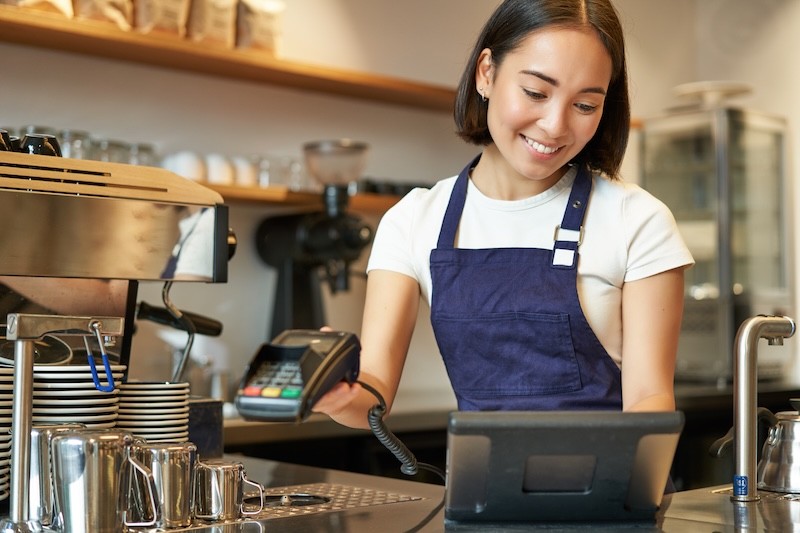
A POS system is one of the few restaurant investments where the return is felt across every part of the business. Not just in how orders are taken or payments processed, but in how confidently you make decisions, how smoothly your team operates, and how consistently your guests are served. For operators weighing the investment, the advantages below show where a POS system creates measurable value.
Top Benefits of a POS System in Your Restaurant
The advantages of a POS system go well beyond replacing a cash register. Each benefit below addresses a specific operational need that directly affects your revenue, your costs, or your guest experience, often all three at once.
Order Accuracy
Every remade dish costs more than the ingredients on the plate. There's the labor to refire it, the delay that ripples through other tickets, and a guest whose experience took a hit before the entrée even landed.
A POS cuts that exposure by replacing handwritten interpretation with structured digital tickets. Modifiers are predefined, allergy flags are built into the item, and the kitchen receives a clean, complete order every time. Your back-of-house can trust what they're reading, even during the heaviest volume stretches.
There's a guest-facing benefit here, too, that often gets overlooked. When someone with a serious allergy sees that their modification was captured and communicated clearly to the kitchen, that builds a level of trust that keeps them coming back. Accuracy isn't just an operational metric. It's part of how your restaurant earns loyalty.
Integrated Payments
This one goes deeper than faster checkouts, though speed matters too.
Security and compliance. Card data is encrypted end-to-end between the POS and the processor. Your staff never handles raw card numbers, which significantly reduces your PCI compliance burden. In an industry where chargebacks and fraud exposure are constant concerns, that layer of protection carries more weight than most operators give it credit for.
Flexible restaurant payments. Guests expect choices. Credit, debit, contactless, mobile wallets, gift cards, sometimes a combination on a single check. A POS handles all of it through one integration, one terminal. No workarounds, no juggling between systems.
Financial accuracy. Every charge ties directly to the original order. Splits by seat, item, or custom amount take seconds. Tips are recorded against specific checks. At close, your numbers reconcile cleanly because there was never a manual transfer of data between systems.
The combined effect is a faster payment processing for guests, safer for your business, and significantly cleaner for your books.
Real-Time Inventory Tracking
Most food cost problems don't announce themselves. They build quietly through over-ordering, unnoticed spoilage, and dishes that cost more to plate than they return in revenue.
A POS that tracks inventory as orders fire gives you continuous visibility into consumption patterns, not what someone estimated during a walk-in count on Monday morning. Over weeks and months, that data reveals trends that periodic manual tracking can't surface.
Purchasing precision. You order based on verified usage, and that distinction alone can shift food cost by several percentage points over a quarter.
Waste identification. You start seeing where product disappears, whether it's over-portioning on the line, prep inefficiency, or items sitting too long before they're used.
Menu profitability clarity. Each dish's true cost becomes visible against its sales performance. When a menu item isn't pulling its weight financially, the numbers tell you before your instinct does.
Inventory management stops being a periodic task and becomes an ongoing source of financial intelligence that feeds better decisions across the whole operation.
Automatic Tax Calculation
Restaurant tax rules are layered in ways that make manual application genuinely risky. Dine-in versus takeout rates, alcohol versus food, varying municipal rules, and sometimes different rates for the same item depending on how it's served. Getting any of these wrong isn't dramatic in the moment. It's quiet. And a wrong rate applied consistently across thousands of transactions creates a liability you won't see until the end of the quarter.
A POS handles all of it according to rules you configure once. Update when rates change, and the risk goes away.
This also protects your pricing strategy in a way that's easy to miss. When tax is calculated correctly on every transaction, your menu prices reflect true margins. There's no slow erosion in the background because the wrong rate was applied to your highest-volume category for three months without anyone catching it.
Real-Time Sales Monitoring
Reviewing yesterday's numbers tells you what happened. Watching today's numbers while service is still running tells you what you can do about it. That distinction changes how you manage.
If lunch is trending below last week by 11:30, you can adjust staffing before you've committed a full shift of labor to a slow floor. If appetizer attachment rates climbed after a menu redesign, you'll know within days, not after a monthly review.
Over time, this data builds into something larger. Seasonality patterns emerge. Daypart trends become clear. The revenue impact of operational decisions becomes measurable rather than assumed. That kind of historical perspective shapes budgeting, hiring, and growth planning with a confidence that intuition alone can't provide.
Some operators glance at their dashboard a few times during service. Not to hover, but because staying connected to live numbers lets them make small adjustments that compound into meaningful results over weeks and months.
Menu Customization
When updating your menu takes half a day of reprinting, reprogramming, and retraining, changes get delayed. Prices lag behind food cost shifts, underperforming items linger longer than they should, and seasonal opportunities pass because the effort doesn't feel worth it.
A POS removes that friction entirely. Pricing adjustments, new dishes, removed items, and modifier changes all live across every terminal in minutes. Different daypart menus activate on schedule without anyone needing to remember what's currently available.
This flexibility changes behavior, and that's where the value compounds. When the barrier to change is low, you update more often. You test a weekend special, track how it performs, and decide on Monday whether it earned a permanent spot. Restaurants that manage their menus this way tend to run tighter margins and serve a more relevant dining experience than those working off the same static lineup for months.
Order Queue Management
Kitchen speed and coordination determine how many covers you can push through on a given night. A kitchen display system connected to your POS gives the entire line a shared, real-time view of incoming orders, timing, and progress.
Every station sees the same information, which keeps coursing coordinated. Apps don't land ten minutes before entrées are ready. Expo catches slowdowns before they cascade into the dining room. When the whole line can see where things stand, communication shifts from shouted questions to a glance at the screen.
There's a revenue angle and an experience angle, and they reinforce each other. Tighter kitchen flow means faster ticket times and more covers during peak service. It also means food arrives at the right pace, properly coursed and properly timed, which is the kind of dining quality that guests feel, even if they can't articulate why everything just felt right.
End-of-Day Reconciliation
Every transaction, void, discount, and payment method is logged throughout the shift. At close, your manager reviews organized POS data and reports rather than reconstructing the night from memory and a stack of receipts.
The deeper value shows up over time. A drawer that's consistently short on the same shift. Void rates that spike from a particular terminal. Comp percentages are drifting higher week after week. These are patterns that manual closing procedures never catch, but they become obvious when the data is centralized and clean.
There's a cultural dimension here too, that's easy to underestimate. When your team knows every action is tracked and traceable, accountability becomes part of the operating rhythm. Not through surveillance, but through transparency. That shift benefits everyone from the newest server to the closing manager.
Employee Time Tracking
Labor is typically a restaurant's highest controllable cost, and managing it well requires data that's both accurate and granular.
A POS employee scheduling feature captures every clock-in and clock-out against the schedule, giving you labor cost breakdowns by shift, role, and individual without maintaining a separate timekeeping system. Overtime surfaces before payroll, not after. Scheduling drift gets caught in real time. And when disputes about hours come up, timestamps resolve them cleanly.
The longer-term benefit is smarter scheduling. When you can see how labor cost correlates with revenue across different shifts and dayparts, you start building schedules based on demand rather than habit. That's where real labor savings come from. Not from cutting hours, but from placing them with more precision.
Role-based permissions round this out by keeping each team member's system access appropriate to their responsibilities. Your bartender manages bar tabs and the menu. Your host works the floor plan. Financial reports stay with the people who need them.
Customer Data Collection
Every transaction adds to a growing picture of your guest base. What they order, how frequently they return, what their average check looks like, which promotions drive behavior versus which ones just cost margin.
What the data reveals | The advantage it creates |
Regulars favor certain items on specific nights | Purchasing aligned with real demand |
A new dish shows strong reorder rates | Menu validation based on evidence, not hope |
Loyalty redemptions cluster on certain days | Staffing and prep matched to guest patterns |
There's a strategic layer here that extends beyond daily operations. Understanding your guest mix, first-timers versus regulars, what drives repeat visits, and how segments differ in spending behavior, shapes decisions about marketing investment, concept direction, and timing for growth. The more clearly you understand who your guests are, the better every other decision becomes.
Table and Seat Management
A POS table management system with a floor plan gives your host, servers, and managers a shared real-time view of table status, seat times, and section balance. That shared visibility alone improves how the dining room flows during a busy service.
Seat-level ordering adds precision that benefits both operations and the guest experience. Dishes arrive at the right person without interruption. Checks split instantly. Your host makes seating decisions based on turn-time data rather than a visual guess from the stand.
When tables turn even a few minutes faster through better coordination, and sections stay balanced based on real information, that's additional coverage across a full week. Better yet, guests in those seats receive more organized, attentive service because the system supports the team rather than slowing it down.
Discount and Promotion Application
Running promotions without measuring their impact is giving away margin and hoping it pays off. A POS changes that by applying discounts based on rules you define and logging every instance automatically.
You can see how many times a promotion triggered, what it cost, whether it lifted volume enough to justify the margin hit, and how results varied by daypart or server. That turns discounting from guesswork into a strategy you can refine with confidence.
There's a consistency benefit, too. When the system applies promotions based on rules rather than individual judgment, every guest receives the same offer under the same conditions. No favorites, no forgotten discounts, no uncomfortable moment when one table got a deal and the next one didn't.
A quick mention during pre-shift keeps your team aligned on what's running that day.
Stock Alert Notifications
When a signature dish gets 86'd on a Saturday night, it doesn't just cost you one sale. It costs every table that would have ordered it for the rest of the service. Multiply that by the item's margin, and the impact becomes much larger than most operators instinctively calculate.
Stock alerts notify you when ingredients drop below thresholds you define, shifting inventory management from reactive to preventive. You're reordering before a shortage hits the floor, not responding after it already has.
Most valuable for long lead-time ingredients where last-minute orders aren't possible, perishables where the window between enough and too much is narrow, and high-margin items that disproportionately drive both revenue and guest satisfaction.
Beyond avoiding the 86, consistent availability protects your menu's integrity. When guests can count on their favorites being there, that reliability quietly builds trust in your operation.
Multi-Location Syncing
This one speaks to operators running or planning multiple locations. If that's not your situation today, it may become relevant as your business grows.
Managing more than one site introduces complexity that catches a lot of operators off guard. Menus drift between locations. Pricing gets inconsistent. Reporting lives in separate systems; nobody has time to cross-reference. Small differences accumulate until they start affecting both margins and guest experience.
Tools for managing multi-location chains provide centralized control. Push a menu or pricing update once, and it applies everywhere. Pull consolidated reports from a single dashboard. Compare labor, ticket averages, and product mix side by side to understand where each location stands.
Brand consistency matters just as much as operational efficiency here. When a guest visits your second location and finds the same menu, pricing, and standard of experience, that's what transforms a good restaurant into a recognizable concept. Centralized systems are what make that possible as you scale.
How Blogic Systems Supports Restaurant Operations
Blogic Systems restaurant POS provides a bespoke approach. Rather than delivering a standard setup, the system is customized around the workflows and operational needs of each restaurant concept. A bar doesn't operate like a quick-service counter, and it doesn't run like a full-service dining room. Blogic configures accordingly, so the technology fits how your team works from day one.
The platform covers the full scope of restaurant management, from ordering and payments to inventory, reporting, staff scheduling, and guest engagement. And as a hybrid POS, Blogic maintains uninterrupted functionality even when your internet connection drops. Orders keep processing, payments keep going through, and your kitchen never skips a beat. When you're back online, everything syncs automatically.
The Bottom Line
Each advantage above strengthens a different part of your restaurant, from kitchen execution to front-of-house flow to financial clarity. Some save money directly. Others protect you from risks that are easy to overlook until they become expensive. And a few create revenue opportunities that might not have been visible before.
A POS system isn't about keeping up with trends. It's about running your restaurant with the precision, visibility, and control that today's margins demand and your guests deserve.

Erick Tu
Author
Related Articles

Aug 7, 2026
Bakery POS System Features: What to Look For Based on Your Bakery Type
May 8, 2026
Switching Restaurant POS System
May 1, 2026
How Much Does a POS System Cost for a Restaurant
Apr 27, 2026
Restaurant Workflow Automation: What to Automate First (and Why Most Operators Get It Wrong)