
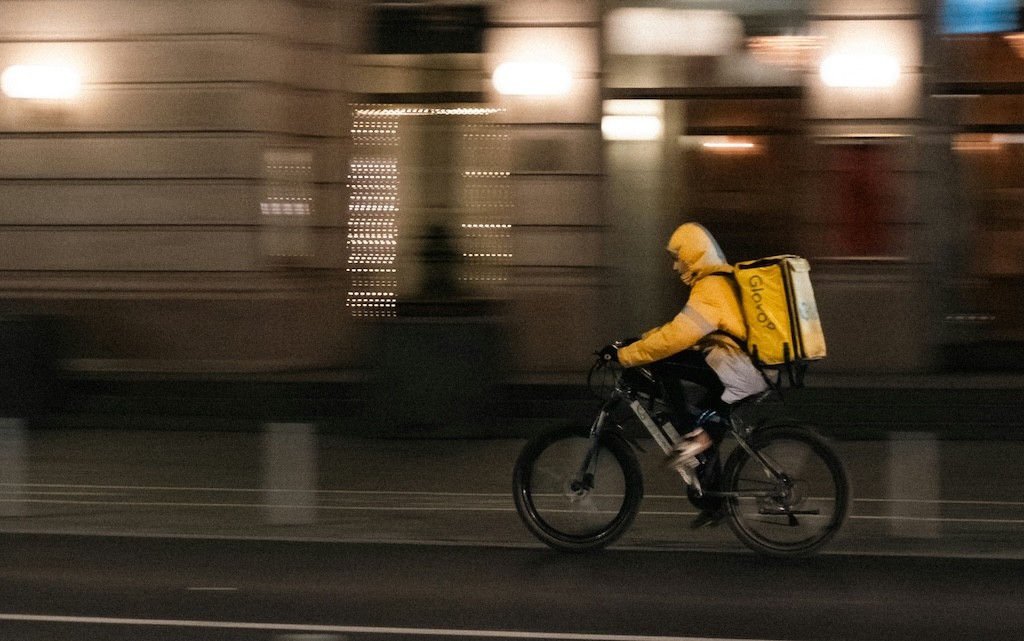
Delivery used to be a nice extra. Now it's how a lot of restaurants stay afloat. The question isn't whether to offer it, but how to set it up without wrecking your kitchen flow or watching your margins disappear into app fees.
Some places go all-in on third-party apps. Others build their own delivery teams. Most end up doing both because neither option is perfect. Apps are expensive but easy. In-house delivery is cheaper per order but adds a whole layer of management you didn't have before.
This guide covers what you need to do to get delivery running, whether you're starting from scratch or fixing what's not working.
Plan Your Delivery Operations
You can't just flip a switch and start delivering. Even if you're using DoorDash or Uber Eats, you need to know where you're delivering, when, and who's handling the extra work.
Map your zones based on real drive times, not distance. A three-mile delivery sounds fine until you realize it crosses two school zones and a construction bottleneck during lunch. Drive the routes yourself during peak hours. If it takes more than 20 minutes to get there, you're pushing it.
Delivery hours don't have to match your regular hours. A breakfast spot might only offer delivery until 10:30 AM when online orders taper off. A busy Italian place might cut off delivery at 8 PM on Fridays because the dining room is packed and the kitchen can't handle both.
Think about your kitchen before you add delivery orders to the mix. You'll need someone managing packaging and prioritizing orders. If you're doing in-house delivery, you need drivers who actually show up and don't get lost. A lot of restaurants understaff delivery at first, then scramble when orders start piling up.
For in-house delivery, vehicle logistics matter:
Insurance requirements if drivers use their own cars
Gas reimbursement or mileage rates
Vehicle maintenance if you're providing transportation
Backup plans when someone's car breaks down
One restaurant I know started delivery with two drivers sharing one beat-up Honda. Worked fine until the transmission went out on a Saturday night. Now they keep a spare scooter in the back.
Build a Menu That Travels
Your dine-in menu and your delivery menu shouldn't be identical. Some dishes just don't travel.
I've seen restaurants try to deliver delicate plated salads that arrive as wilted piles of brown lettuce. Crispy fried chicken that turns soggy in a closed container. Pasta that congeals into a brick by the time it reaches the customer. If it doesn't hold up for 25 minutes in a bag, don't put it on the delivery menu.
Start by testing items yourself. Box up a few dishes, drive them around for 20 minutes, then open them up and see what you've got. If you wouldn't want to eat it, your customers won't either.
Some fixes are simple. Pack sauce separately. Use vented containers for fried foods. Send burgers deconstructed so the bun doesn't steam itself into mush. A taco place near me switched to sending tortillas and fillings in separate containers. Customers assemble at home. No more complaints about soggy shells.
Delivery packaging costs more than you think. Good containers, bags, utensils, napkins, condiments... it adds up fast. Some restaurants build this into menu pricing by charging a dollar or two more for delivery items. Others add a packaging fee at checkout. Either way, you can't absorb the cost and pretend it doesn't exist.
Setting Up Third-Party Delivery
Third-party apps are the path of least resistance. You get access to their customer base, their drivers, and their technology without hiring anyone or building infrastructure. The trade-off is commission fees that typically run 15% to 30% per order.
Choose the Right Platform
DoorDash dominates most markets. Uber Eats does well in cities. Grubhub has brand recognition but isn't always the best performer. There are regional players too, depending on where you are.
Don't assume you need all of them. Start with one or two and see what drives volume. Some apps work great in certain neighborhoods and bomb in others. Ask around. Other restaurant owners will tell you which platforms have reliable drivers in your area and which ones leave orders sitting for 40 minutes.
Commission rates vary based on what services you want. Full-service marketing and delivery costs more. Self-delivery with their ordering platform costs less. Read the contract. Some apps lock you into exclusivity clauses or minimum order commitments.
Coverage matters more than brand name. If an app doesn't have enough drivers during your dinner rush, orders will sit, food will get cold, and customers will blame you, not the app.
Integrate Orders Into Your POS
Manual entry from tablets is a disaster waiting to happen. Your server reads an order off the DoorDash tablet, writes it on a ticket, punches it into the POS. Somewhere in that chain, someone transposes a burger for a sandwich or forgets the side order entirely.
POS integration eliminates that. Orders flow directly from the app into your system. They print in the kitchen, update inventory, and get tracked like any other order. Your team confirms when it's ready. That's it.
Blogic's restaurant POS connects with major delivery platforms so orders route automatically into your kitchen without manual entry or tablet juggling. Once it's running, you're monitoring everything from one screen.
Menu syncing prevents the worst kind of mistake: someone orders an item you're out of, you cancel, they get mad, you get a bad review. When your POS marks something as 86'd, that should update across all apps instantly. Our inventory management handles this automatically, keeping your delivery menus in sync with what's actually available.
Managing Third-Party Orders in Your Kitchen
Delivery orders hit differently than dine-in. There's no server to clarify "no onions" or suggest a substitute. The ticket just prints and you make it.
Timing is tight. Most apps estimate a driver pickup time when the order comes in. If you prep too early, food sits and gets cold. If you're late, the driver leaves or stands around looking annoyed. Your goal is to have orders ready within a minute or two of driver arrival.
Labeling saves chaos. During a Saturday dinner rush with ten delivery orders waiting, unlabeled bags all look the same. Use stickers with order names and platform logos. Some places use different colored bags for each app. Makes it easy to grab the right order fast.
Check everything before it goes out. Missing items are the number one delivery complaint. Create a packing checklist: entree, sides, utensils, napkins, condiments, drinks. Have one person verify each order before it gets bagged.
Building Your Own Delivery Operation
In-house delivery means you control everything: the driver, the timing, the customer communication, the whole experience. You also keep the 20-30% that would've gone to an app. But you're managing a small fleet operation now, and that's not nothing.
Route Planning and Driver Zones
You need a system for who delivers where. Random driver assignments lead to inefficiency. One driver criss-crosses town while another sits idle.
Zone your delivery area and assign drivers to specific zones per shift. A driver working the north side knows those streets, knows where to park, knows which apartment buildings have confusing layouts. Efficiency goes up. Delivery times go down.
Batching works if you have the volume. One driver takes three orders to the same neighborhood in a single trip. Just watch your timing. Don't let the first order sit for ten minutes while you wait for the other two to finish cooking.
Staffing levels should match order volume:
Low weekday lunch? One driver.
Busy weeknight dinner? Two or three drivers covering different zones.
Friday or Saturday night? Four drivers minimum, with one floating for overflow.
Track your patterns for a month. You'll see when orders spike and when they drop. Staff accordingly.
Track Orders Through Your POS
Your POS should make delivery tracking simple. Order comes in, routes to the kitchen, appears on a delivery screen. Manager or host assigns it to an available driver. Driver confirms, heads out, marks the order as delivered when they're done.
Customers get automatic updates: order confirmed, food's being made, driver's on the way, delivered. They're not calling every ten minutes asking where their food is.
Blogic's delivery features handle order assignment, driver tracking, and customer notifications through the same system managing your dine-in orders. One platform, everything tracked in one place.
Training Drivers Who Represent Your Brand
Drivers represent your restaurant. If they show up sloppy, rude, or unprofessional, that's what customers remember.
Train them on checking orders for accuracy before leaving, handling special instructions at the door, what to do when no one answers, and how to communicate problems back to the restaurant immediately.
A friendly, professional driver makes a difference. "Hey, got your order here, everything should be good" goes a long way. So does knowing when to call the restaurant because something's clearly wrong with the order.
Teach drivers how to organize multiple orders in their car so nothing tips over. Show them how to use GPS effectively and which routes avoid typical traffic. Keep insulated bags in good condition. Small stuff that adds up to better delivery times and hotter food.
Quality Control and Customer Communication
Delivery quality falls apart in three places: kitchen prep, packaging, and timing. Fix those and most complaints disappear.
Standardize everything. Same containers, same portions, same packing process every time. When quality varies order to order, customers notice. And complain.
Test your packaging under real conditions. Does the lid seal? Does the container leak when it tilts? Will the food stay hot for 20 minutes? If not, find better packaging. Yes, it costs more. It also costs more to refund orders and lose customers.
Most delivery complaints come from lack of information. Customer doesn't know when food's arriving. Order's late and no one told them why. Something's wrong and they can't reach anyone.
Keep customers in the loop: Confirm orders immediately, send prep and delivery status updates, notify them proactively if something's delayed or out of stock, and make it easy to reach you if they have questions.
When things go wrong, don't wait for them to call. Out of an item? Text them immediately with a substitution or refund option. Driver running late? Let them know as soon as you realize it. Proactive communication turns angry customers into understanding ones.
Handling Complaints Fast
You're going to screw up occasionally. Everyone does. How you handle it matters more than the mistake itself.
Make refunds and replacements fast and easy. Don't argue. Don't make customers work for it. If they say something was wrong, fix it immediately. A $15 refund costs way less than a 1-star review and a lost customer.
Track complaints so you can spot patterns. If five people in a week say food arrived cold, that's a packaging or timing problem, not bad luck. If the same driver gets complaints about attitude, you have a personnel issue. Fix systemic problems, not just individual orders. Your POS reporting tools can help track these patterns so you catch problems before they become reputation disasters.
What Actually Works
Most restaurants end up using both third-party apps and in-house delivery. Apps handle overflow and reach customers outside your normal zone. In-house handles your core area where you can deliver efficiently and keep more of the money.
Start simple. If you're new to delivery, launch with one app and see what happens. Learn the workflow, figure out timing, get your kitchen dialed in and then work towards improving delivery orders. Then expand if it makes sense.
If you're building in-house delivery, start small. One or two drivers covering a tight zone. Prove the model works before you add more complexity.
The restaurants doing delivery well aren't the ones with the fanciest setup. They're the ones who sorted out their processes, trained their people, and stayed on top of quality and communication. The rest is just execution.

Erick Tu
Author
Related Articles
Mar 27, 2026
QSR vs FSR: Differences Between Full and Quick Service Restaurants

Feb 23, 2026
Cafe vs Restaurant: Operational Differences That Matter
Dec 17, 2025
How to Calculate and Improve Your Restaurant's Table Turnover Rate
Dec 10, 2025
Front of House vs Back of House: Two Sides, One Guest Experience