
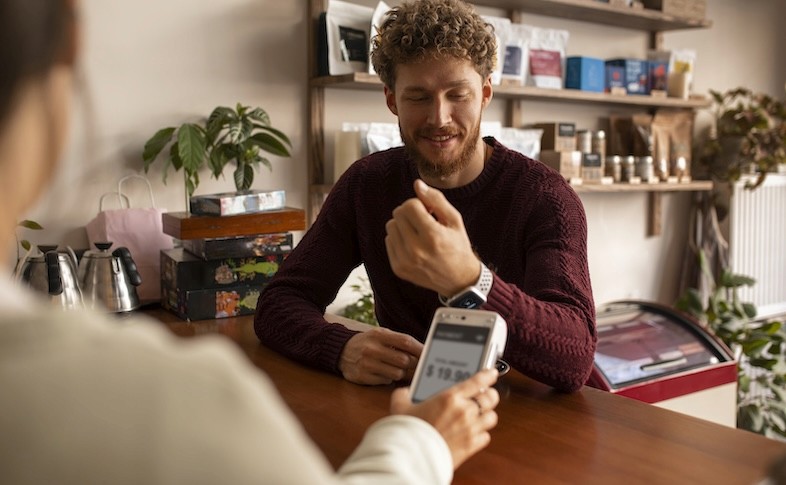
Tap, scan, swipe, click. Restaurant payment methods have expanded fast, and your guests expect you to keep up. But accepting payments in a restaurant goes beyond just offering options. It's about how those payments are processed, how they connect to your POS, and how your setup holds up during a busy service.
We built this guide to help you sort through it. What payment methods restaurants are using in 2026, how payment processing works behind the scenes, and what to look for when building a setup that fits your format and volume.
Why Payment Flexibility Matters More Than Ever
Guest expectations around payment have caught up with every other industry. The same person who taps their phone at a coffee shop, pays through an app for groceries, and splits a bill with friends via digital wallet doesn't want to wait around for a paper check and a countertop terminal.
But this isn't just about keeping guests happy.
Payment methods directly affect how fast your floor moves. A 45-second contactless tap versus a two-minute chip-insert-and-sign might not sound like much. Multiply it across 120 covers on a Saturday night, and you're looking at real differences in table turn time, server efficiency, and revenue.
There's also a data angle. Cash tells you almost nothing about who spent what and when. Digital payments feed your POS with transaction data you can use for smarter staffing, menu pricing, and marketing. The restaurants running the tightest operations in 2026 aren't just accepting payments. They're using payment data as an operational tool.
Restaurant Payment Methods: What's Available and What Works
Not every payment method makes sense for every restaurant. A fine-dining room has different needs than a taco counter. Here's what's out there and where each one fits best.
Cash Payments
Still around, still declining. Cash now accounts for less than 16% of transactions in most urban markets, and that number keeps dropping. Going fully cashless isn't the right call everywhere, though. Some neighborhoods, some demographics, some business models still see meaningful cash volume.
What's easy to overlook is the operational cost. Counting drawers, making bank runs, managing shortages, and dealing with theft risk. If cash makes up less than 10% of your sales, it's fair to ask whether the handling cost is worth it.
Credit and Debit Cards
Still the backbone of restaurant payment processing. EMV chip cards remain the most common method in full-service and casual dining. Guests understand them, servers know the flow, and processing is reliable.
A few things worth noting in 2026:
Chip-insert is slower than contactless. If your terminals support tap-to-pay, push it.
Debit often carries lower processing fees than credit, though most restaurants don't steer guests either way.
Still running swipe-based terminals? You're behind on security and guest perception both. EMV compliance shifted fraud liability to the merchant years ago.
Contactless Payments (NFC)
Tap-to-pay has become the default for a lot of guests. Hold a card or phone near the reader, transaction clears in under two seconds, done. No signatures, no chip waits, no handing anything to a server.
This is one of the easiest payment options most restaurants can add. If your POS terminals already have NFC capability (most modern ones do), it's a matter of enabling it, training your team to offer it, and placing the reader where guests can reach it comfortably.
Mobile Wallets: Apple Pay, Google Pay, Samsung Pay
These work through the same NFC readers as contactless cards, so there's usually no additional hardware cost. The guest authenticates with their face or fingerprint, taps, and the payment is done.
Why mobile wallets deserve attention beyond speed:
Security. Mobile wallets use tokenization, meaning the actual card number never touches your system. This reduces your PCI compliance burden.
Loyalty integration. Apple Wallet and Google Pay can store loyalty cards and offers alongside payment credentials. If you run a rewards program, this is a natural connection point.
Demographics. For guests under 40, the phone is the wallet. Not accepting mobile payments increasingly reads as outdated.
QR Code Payments
The guest scans a code at the table or counter, pulls up their check on their phone, and pays. No terminal interaction, no server needed for the transaction itself.
Where QR payments shine:
Fast-casual and quick-service spots with high turnover. Understaffed shifts where servers can't get to every table quickly. Patios and outdoor areas where running a portable terminal back and forth slows everything down.
Where they can feel off:
Full-service restaurants where the personal checkout interaction is part of the experience. Some older demographics find QR payments confusing or impersonal.
The critical detail here is integration. A QR payment system that connects directly to your POS, automatically closing checks and recording tips, is a genuine operational improvement. One that runs as a separate platform, your team has to reconcile manually at night, is just a different kind of headache.
Online and App-Based Payments
When your restaurant does delivery, takeout, or pre-orders, most guests pay before they ever walk through the door. They check out on your site, tap pay in an app, or complete the order through a third-party platform.
This is where embedded payments keep gaining ground. Payment becomes part of the ordering process itself. A guest orders through your app, their card on file gets charged, and they pick up their food. No line, no terminal, no transaction moment at all.
Here's where it gets tricky. Those online payments need to land in the same POS system as your dine-in sales. Otherwise, you're stuck reconciling two separate streams every night, and you never get a clean read on total revenue. Keep it all in one place, and the reporting takes care of itself.
How Payment Processing Works in Restaurants
Knowing what happens between the guest tapping their card and the money hitting your bank account helps you make better calls on costs, systems, and security.
The Transaction Flow
Every card or digital payment follows a similar path:
Authorization. Your POS sends transaction details to the payment processor. The processor checks with the card network (Visa, Mastercard, etc.) and the issuing bank. Approved or declined, usually within one to three seconds.
Batching. Approved transactions pile up throughout the day. Most restaurants batch and submit at close, often automatically through the POS.
Settlement. Funds move from the issuing bank to your merchant account, minus fees. Typically, one to two business days.
Where your POS matters here: a solid payment setup handles authorization, tip adjustment, check splitting, and batching from one screen. Nobody on your team should be jumping between systems or manually closing out batches.
Processing Fees: What You're Paying
Restaurant payment processing fees typically fall between 2.5% and 3.5% per transaction, but the structure varies. The two most common models:
Pricing Model | How It Works | Best For |
Flat-rate | Same percentage on every transaction (e.g., 2.9% + $0.30) | Simplicity, lower volume |
Interchange-plus | Actual interchange cost + fixed markup | Higher volume, cost savings |
Flat-rate is easier to predict. Interchange-plus is usually cheaper if you're processing $30K+ per month. Either way, read the fine print for monthly minimums, batch fees, PCI non-compliance charges, and equipment rental costs that can add up quietly.
A practical note: If you haven't renegotiated your processing rates in the last two years, do it. Processors expect it. Restaurants doing solid volume have more leverage than they realize.
Security: What You Need to Have in Place
Payment security in restaurants isn't something you set up once and forget. It's an ongoing operational responsibility.
Non-negotiables for 2026:
PCI DSS compliance. The industry standard for handling cardholder data. Non-compliance can mean fines, higher processing rates, and serious liability exposure.
End-to-end encryption (E2EE). Card data should be encrypted from the moment of the tap or insert through the entire transaction.
Tokenization. Especially critical for mobile wallets and online payments. The real card number is replaced with a one-time token, making intercepted data worthless.
EMV chip processing. Still the most secure in-person method. If a fraudulent chip transaction occurs on a non-EMV terminal, the liability falls on you.
Staff training is part of this, too. Servers should know never to write down card numbers, how to spot a skimming device, and what to do if a terminal behaves strangely. Security is a system and a habit, not just a software setting.
Choosing the Right Payment Setup for Your Restaurant
There's no universal answer here. Your format, guest profile, volume, and current systems all shape what makes sense.
Match Payment Methods to Your Service Model
Sit-down restaurants get the most out of contactless payments, mobile wallets, and integrated check-splitting. A full-service POS with table-side terminals speeds up that end-of-meal moment and cuts down on server trips to a stationary reader.
Fast-casual is all about speed. NFC tap-to-pay, QR code payments, and self-service kiosks with built-in processing. A quick-service POS that handles all of these keeps the line moving.
Delivery and takeout-heavy spots need online payments to work without hiccups. That means tight integration between the delivery platform and POS. A paid online order shouldn't create confusion in the back of house.
Integration Is the Deciding Factor
This is the point where a lot of restaurants make costly mistakes. They add a QR payment tool that doesn't connect to their POS. They onboard a delivery platform that creates a separate revenue stream with no link to inventory or reporting. They buy a sleek new terminal that can't communicate with their kitchen printer.
Before adopting any new payment method or tool, run through this:
Does it integrate directly with my POS system?
Will transactions show up in my existing reports and dashboards?
Can my kitchen receive orders from this payment channel the same way as dine-in?
Does it handle tips, splits, and voids without workarounds?
If the answer to any of those is no, you're adding complexity, not solving a problem. The best payment systems are the ones your team barely has to think about because everything flows through one place.
A hybrid POS platform, one that runs on local hardware but syncs to the cloud, gives you an important safety net here. If your internet drops during a Friday rush, transactions still process locally. Nothing gets lost. When connectivity returns, everything syncs. That kind of reliability doesn't make headlines, but it's what keeps service running when it matters most.
The Real Operational Impact
Faster payments mean improved table turnover rate. A casual spot in San Diego switched from chip-insert to tap-to-pay and added QR payments on the patio. Weekend dinner turns shortened by six minutes. No layout changes, no extra staff. Just a quicker checkout across the floor.
Beyond speed, consolidating all transactions through one POS reduces the errors that come with manual steps. Wrong amounts, misapplied tips, and drawers that don't balance. When the system handles totals, tax, and check closing in a single flow, end-of-night reconciliation goes from 45 minutes to 15.
And then there's the data. Average check by daypart. Tip trends by server. Peak transaction windows down to the minute. When every payment runs through one system, you get visibility that makes staffing, pricing, and promo decisions a lot less like guesswork.
Common Challenges With Adopting New Payment Methods
Cost anxiety. Processing fees feel like a revenue tax, and they are. But evaluate payment technology on the total cost of operation, not just the per-transaction rate. If a faster payment method turns two extra tables per night, that revenue dwarfs the fee difference.
Staff resistance. Roll out new tech without preparation, and you get chaos on the floor. Roll it out with proper training, and it makes everyone's shift easier. Hands-on practice before go-live. A one-page cheat sheet at each station. A designated troubleshooter per shift who isn't the manager.
Integration headaches. This is almost always a vendor selection problem. Pick a restaurant POS software that supports broad integration, delivery platforms, loyalty tools, and accounting software, and most of those duct-tape workarounds go away.
What's Coming Next
A few trends are worth watching without overhauling your operation around them just yet.
AI-assisted payment optimization. Some POS platforms are beginning to use machine learning to adjust tip prompt configurations, detect transaction anomalies, and predict peak payment windows for labor planning. Early stage, but the direction is promising.
Biometric payments. Palm scanning and facial recognition are being piloted in limited markets. The technology works. Broad guest adoption is the open question. Worth monitoring, not worth investing in today.
Invisible checkout. The bigger shift is toward payment that happens in the background. Order through an app, walk in, and pick up your food. No transaction step at all. Restaurants building strong digital ordering channels with stored payment credentials are already partway there.
Cryptocurrency. Still a niche play for restaurants. The volatility, tax complexity, and minimal guest demand make it hard to justify for most operations. If your customer base is asking for it, explore it. Otherwise, file it under "not yet."
Building a Reliable Payment Setup
Your POS system handles every transaction, every shift, every report you pull. Choosing one that processes payments reliably, securely, and across the payment methods your guests expect is one of the bigger infrastructure calls you'll make.
Blogic Systems' restaurant payment processing supports contactless, chip, mobile wallet, QR code, and online payments from a single integrated platform. Transactions are PCI-compliant with end-to-end encryption and tokenization built in. And because Blogic runs as a hybrid system, processing doesn't stop when your internet does. Connectivity problems don't mean lost sales or a backed-up checkout line.
Worth a look if you're reevaluating your current setup or trying to pull multiple systems into one.
Wrapping Up
Restaurant payment methods in 2026 offer more capabilities than most operations take full advantage of. You don't need every option out there. You need a setup that fits how you run service, connects to your POS without creating extra work, and takes friction out of the equation for guests and staff alike.

Erick Tu
Author
Related Articles

Apr 3, 2026
Streamlining Transactions for Efficiency and Security

Apr 3, 2026
Unveiling the Hidden Costs and Trade-offs in Payment Processing
Apr 3, 2026
Empowering Your Business: The Essential Elements