
By
Erick Tu
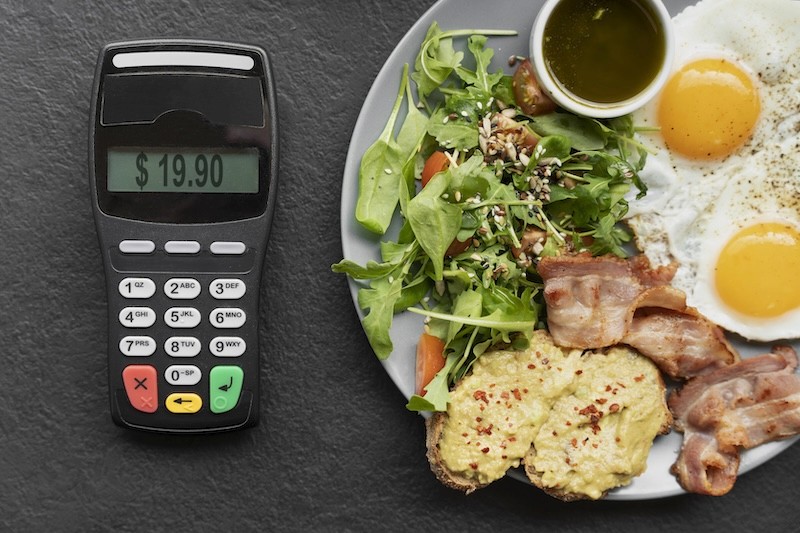
Plenty of restaurants track revenue down to the dollar, but never properly work out their food cost percentage. Some skip it entirely. Others run the numbers wrong, count the wrong things, and end up baffled when the margins keep slipping even on a strong sales month.
So let's fix that. Below is everything you need to calculate food cost percentage properly, what to include, which formulas to use, and how to interpret the result.
What Is Food Cost Percentage in a Restaurant
Food cost percentage is the slice of your revenue that goes to ingredients. Express it as a percentage, and you've got a clean read on how much of every sales dollar is walking back out the kitchen door.
A 30% food cost means thirty cents on every dollar of food sales is buying ingredients. The rest, seventy cents, has to cover everything else. Labor. Rent. Utilities. Equipment. Marketing. Whatever's left is profit.
It's one of the clearest signals you have on the health of your restaurant. With industry profit margins typically sitting between 3% and 9%, even a couple of points of movement on food cost can decide whether a month lands in the black or the red.
One thing that trips operators up: food cost percentage and food cost dollars aren't the same. You can spend more on food this month than last and still see your percentage drop, as long as sales grew faster than your spending. Track the percentage. The dollar figure on its own won't tell you what you need to know.
What Counts as Food Cost and What Doesn't
Before you touch a calculator, get clear on what belongs in the calculation. This is where most restaurant operators slip up.
What counts as food cost:
Raw ingredients in your menu items
Garnishes, sauces, condiments
Cooking oils, seasonings, spices (the Q factor)
Beverages served as part of the dish, like the lemon wedge in the water or the after-dinner coffee
Bread, butter, and any complimentary extras
What doesn't:
Labor (separate category, separate problem)
Takeout packaging and delivery containers
Cleaning supplies and chemicals
Rent, utilities, equipment
Napkins, straws, and other single-use items
Then there's the murky middle. Staff meals. Comps. Voided tickets. Everyone of those eats real food but produces zero revenue, and if you don't track them separately, they hide inside your food cost number until comp culture has quietly chewed through your margin.
The cleanest way to handle them is to track each as its own category, separate from your food cost line. That way, they show up where you can see them, but they don't distort the number you're trying to manage. A modern restaurant POS system lets you set this up in a few clicks, which is the easiest place to do it since the data is already flowing through there.
None of this works without tight inventory in the first place. You can't calculate food cost on stock you haven't counted, which is why solid inventory management is the floor everything else stands on.
How to Calculate Food Cost Percentage
One core formula. Two variations depending on what you're measuring.
The food cost percentage formula
Food Cost Percentage = (Cost of Goods Sold ÷ Total Food Revenue) × 100
COGS for any period is:
COGS = Beginning Inventory + Purchases − Ending Inventory
Put it together, and you get:
Food Cost % = ((Beginning Inventory + Purchases − Ending Inventory) ÷ Total Food Revenue) × 100
Putting it into practice
Imagine you're calculating the monthly food cost for a casual dining spot.
Beginning inventory at the start of the month: $11,000
Purchases throughout the month: $18,000
Ending inventory at month's end: $9,500
Total food revenue for the month: $58,000
COGS first: $11,000 + $18,000 − $9,500 = $19,500
Then the percentage: ($19,500 ÷ $58,000) × 100 = 33.6%
That's at the higher end of healthy. Workable, but there's room to tighten it.
The revenue side of this calculation should be the easy part. If you're still pulling totals from end-of-day printouts or adding up cash drawer numbers by hand, you're losing hours every week and giving errors a chance to creep in. A modern POS gives you total food revenue for any date range in a few clicks, which is one of the advantages of running a proper POS in your restaurant. With the reporting built into the system handling the revenue side, the only manual work left is counting what's on your shelves.
Calculating food cost per dish
Overall food cost percentage tells you about the whole operation. Per-dish tells you whether each menu item is earning its spot.
Per Dish Food Cost % = (Ingredient Cost per Serving ÷ Menu Price) × 100
Ingredient cost per serving means listing every component on the plate and totalling up the cost of the exact amounts you're using.
Margherita pizza, $14 menu price:
Dough: $0.55
Tomato sauce: $0.45
Fresh mozzarella: $1.85
Basil and olive oil: $0.30
Total: $3.15
Per dish: ($3.15 ÷ $14) × 100 = 22.5%
For a casual restaurant, that's strong. Now run the same math on a $24 seafood pasta with $9.60 in ingredients, and you get 40%. That dish is dragging your overall number up. It needs a higher price, a different recipe, or a quiet exit from the menu.
This is also the formula that drives smart pricing. Know your target food cost and your ingredient cost, and you can solve for the menu price: Menu Price = Ingredient Cost ÷ Target Food Cost %. A dish costing $5.40 to make at a 30% target should be on the menu at $18.
Ideal vs actual food cost percentage
The third calculation is your diagnosis. It compares what you should be spending against what you spent.
Ideal food cost percentage is the world where every dish is plated to recipe, every gram of ingredient ends up in a paying customer's order, and waste, theft, and over-portioning don't exist. To calculate it, multiply each dish's ingredient cost by units sold, sum those across the menu, and divide by total revenue.
Actual food cost percentage is the number you get from the main formula. Real life. Waste, spoilage, theft, the cook who's heavy on the cheese, all of it baked in.
The gap between the two is what your operation is bleeding without anyone noticing. If your ideal is 28% and your actual lands at 33% on $60,000 monthly revenue, that's $3,000 a month vanishing into nothing identifiable on the P&L. Annualized, that's $36,000. For a restaurant running a 5% margin, that gap is the entire year's profit on $720,000 in sales.
A point or two of gap is normal. Three points or more mean you have a real operational problem, and you need to find it.
What Is a Good Food Cost Percentage for a Restaurant
Most healthy restaurants run between 28% and 35%. Where you should sit inside that range depends entirely on the kind of restaurant you're running:
Quick service: typically 25% to 30%
Casual dining: 28% to 33%
Fine dining: 32% to 38%, since premium ingredients and lower volume push the number up
Coffee shops: anywhere from 25% to 35%, depending on how much food you sell against beverages
Food trucks: 28% to 32%, with low overhead helping offset thinner margins
And lower isn't automatically better. A food cost under 25% can mean you're skimping on portions, downgrading ingredients, or pricing yourself out of your market. Diners pick up on quality drops faster than they react to a price bump.
The benchmark that matters is the one that lets your restaurant hit its profit target after labor and overhead. For full service, that's usually 28% to 32%. Limited service can run a touch lower. Forget what the industry average says. Ask what number lets you keep the lights on and turn a profit.
Why Is Your Food Cost Percentage Too High
When the number climbs or refuses to come down, it's almost always one of six culprits.
Inconsistent portioning is the most common, and it hides well. A cook plating six ounces of protein instead of five doesn't look like waste. Stretch that across hundreds of covers a week, and it's serious money. No standard recipes, no portion tools, and every shift, cooks a slightly different menu.
Supplier increases that don't show up in your prices will eat margin in silence. Beef went up 12% last quarter, and your burger hasn't moved since last year? Each one's now less profitable than the last.
Spoilage and waste from sloppy inventory rotation will do the same. Without disciplined FIFO, the new stock sits in front, the old stock dies in the back, and your food cost percentage absorbs every dollar that ends up in the bin.
Untracked staff meals, comps, and voids put real ingredients on plates that don't generate revenue. Front of house comping liberally to smooth complaints, kitchen feeding staff family-style without logging anything, and your food cost climbs with no clear cause.
Theft and shrinkage runs 4% to 8% of food cost in restaurants without proper POS controls. Without voids, refunds, and inventory variance traceable back to a specific employee and shift, you can't even start to find the leak.
Menu pricing without recipe costing is the last big one. Items get priced because a competitor charges $14 or because it feels right. Every dish on your menu should have a costed recipe and a price calculated from it.
How to Lower Food Cost Percentage in Your Restaurant
Recipes are where every food cost problem either gets contained or gets worse. Without a clear standard, every cook is interpreting the dish a little differently, and small differences in portioning compound quickly across a busy week. The fix is straightforward, even if the discipline takes time to build.
Portion control and recipe standardization
Standardized recipes are the foundation. Every dish gets a recipe card with exact quantities, plating instructions, and a calculated cost per serving. Portion scales. Scoops. Standardized plating tools. The plate leaves the line the same way every time, regardless of who's working.
Make it easy for cooks to do it right, and consistency follows.
Weekly food cost tracking with your POS
Monthly tracking is too slow. A 4-point spike that took thirty days to surface is thirty days of margin already gone. Weekly tracking catches the same problem in seven, which is why anyone running a tight operation has moved to it.
But this only works if your reporting does the heavy lifting. Manually pulling a week of sales data every Monday is a fast track to giving up on weekly tracking within the month. This is exactly where POS data and reports earn their place; the numbers you need are already there, ready to read. Blogic POS handles the weekly tracking in the background, so Monday becomes about reading the report, not building it.
Menu re-engineering based on food cost data
Once you've got per-dish food cost percentages across the whole menu, you can engineer the menu around profit instead of guesswork. Feature high-margin dishes in prime real estate. Reprice or reformulate anything running above 35%. Cut the items that are both low margin and low volume.
The data lives in your POS sales mix report, which shows you what's selling and what each item is contributing. You stop guessing which dishes pay the rent. The report tells you.
Conclusion
The math behind food cost percentage isn't the hard part. Tracking it consistently, getting the inputs right, and acting on what it tells you, that's the work. The restaurants that come out the other side of ingredient inflation, supply chain mess, and slow operational drift are the ones running these numbers weekly and reacting in days, not months.
Food Cost Percentage FAQs
Does the food cost percentage include labor costs?
No. Food cost is ingredients only. Labor's a separate metric. Add the two together and you get prime cost, the biggest line on most restaurant P&Ls. Healthy prime cost is usually 55% to 65% of revenue.
What is the difference between food cost percentage and COGS?
COGS is a dollar figure on your P&L showing the actual cost of inventory used during a period. Food cost percentage is COGS expressed as a percentage. Your accountant uses COGS for taxes and reporting. You use the food cost percentage to run the place. Same underlying numbers, different questions answered.
Can a POS system calculate food cost percentage automatically?
The revenue side, yes. Your POS pulls total food revenue for any time period instantly, which removes the most error-prone part of the calculation. The inventory side still needs a physical count, though POS systems with inventory integration can track stock and flag variances. Blogic POS hands you revenue and sales mix data on demand, which means the only thing left to do manually is count what's on the shelf.

Erick Tu
Author
Related Articles

Mar 23, 2026
Bar Profit Margins: What to Expect and How to Improve Them
Mar 2, 2026
Revenue Is Not Profit: Understanding Café Margins
Feb 16, 2026
How to Create a Profitable Coffee Shop Menu?

Jan 22, 2026
How to Make Your Cafe or Coffee Shop Profitable?